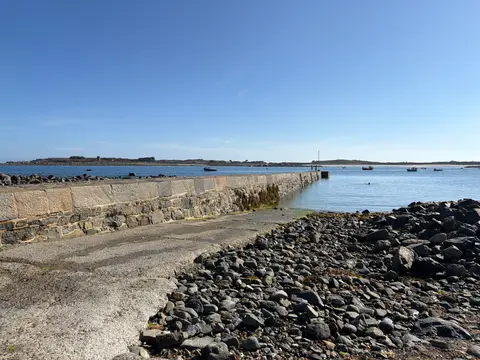
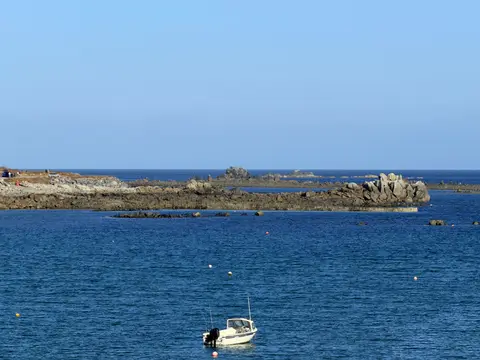
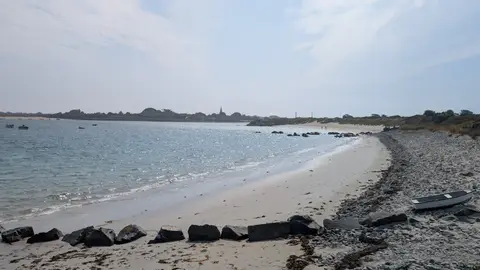
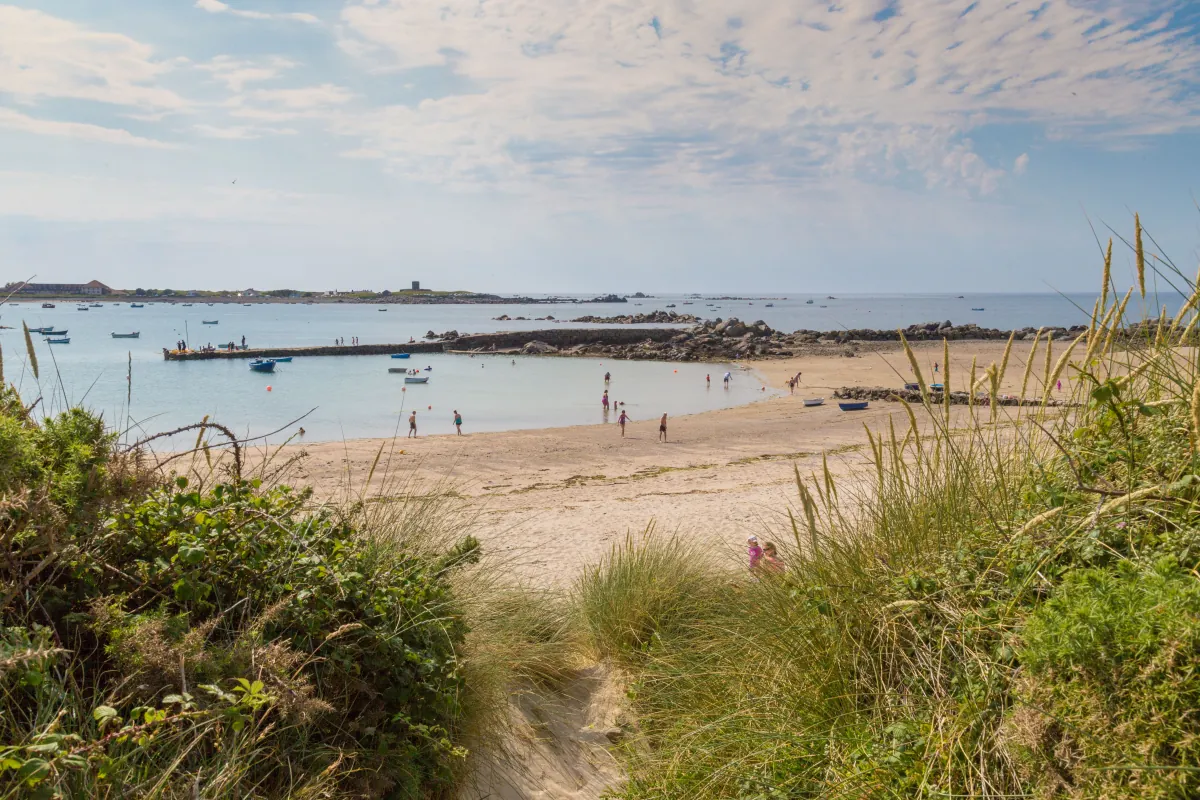
A small north-west coast cove and harbour beneath an eighteenth-century loopholed tower, overlooking Le Grand Havre.
These predictions use St Peter Port, Guernsey’s standard reference port. Local timing and conditions at Rousse can vary slightly with weather and coastal geography. Times are shown in local Guernsey time.
Beta feature. These pier, slip and pool swim windows are new and still being fine-tuned from predicted tide levels — this is not a sea-safety assessment. If a time looks wrong for a spot you know well, please get in touch.
Rousse sits on a low headland at the eastern end of Le Grand Havre, with a small harbour, beach kiosk and a restored loopholed tower and battery. The tower and battery were built in 1778–79 as part of Guernsey’s coastal defences against the threat of French invasion. The exterior can be viewed from the headland, but the tower is currently closed to the public.
The rocky cove beside the harbour is popular for swimming, while the headland provides an easy starting point for coastal walks and views across Le Grand Havre. Until the Braye du Valle was reclaimed in the early nineteenth century, a tidal channel separated northern Guernsey from the rest of the island. Parking on the headland is mainly gravel or loose chippings, and the paths include loose surfaces, moderate slopes and short sections shared with slow-moving traffic.
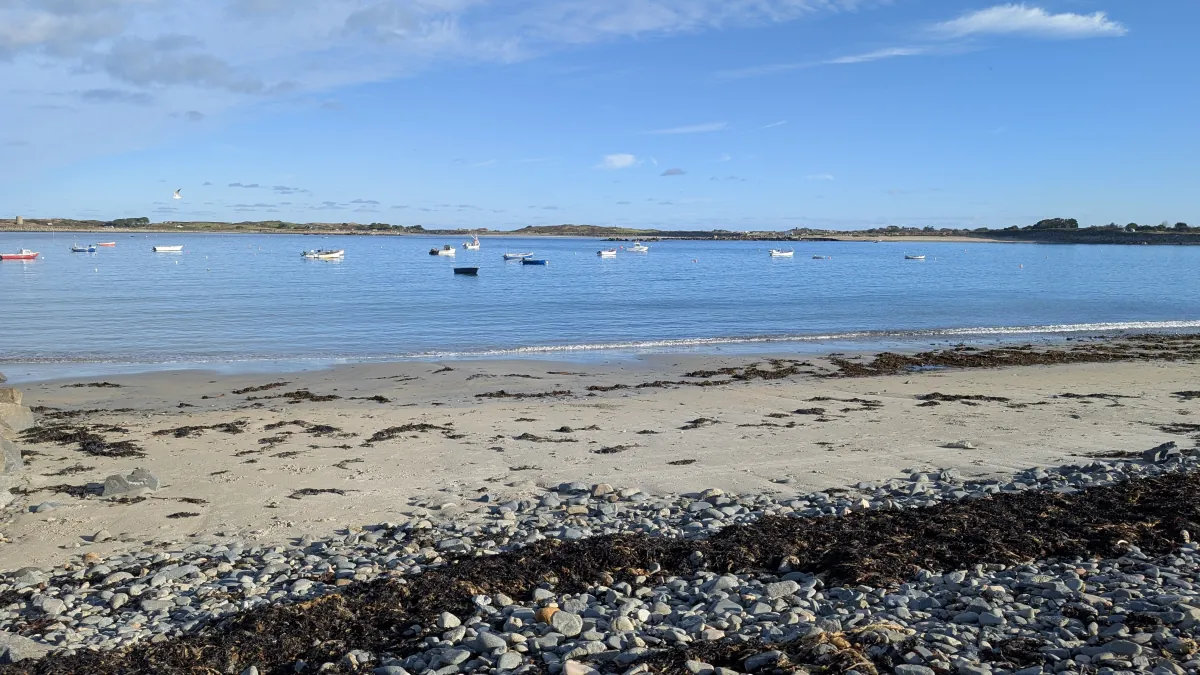
At lower water, more sand, rocks and harbour foreshore are exposed. As the tide rises, the sea returns around the rocky margins and moves closer to the pier and harbour edge. Keep track of the tide when exploring the rocks, and watch for slippery or submerged surfaces. Higher water does not confirm safe depth for jumping or diving. Small boats use the harbour at different tide states; swimmers should remain visible and keep clear of craft approaching the pier, moorings or launching areas.
Other bays and beaches close to Rousse.
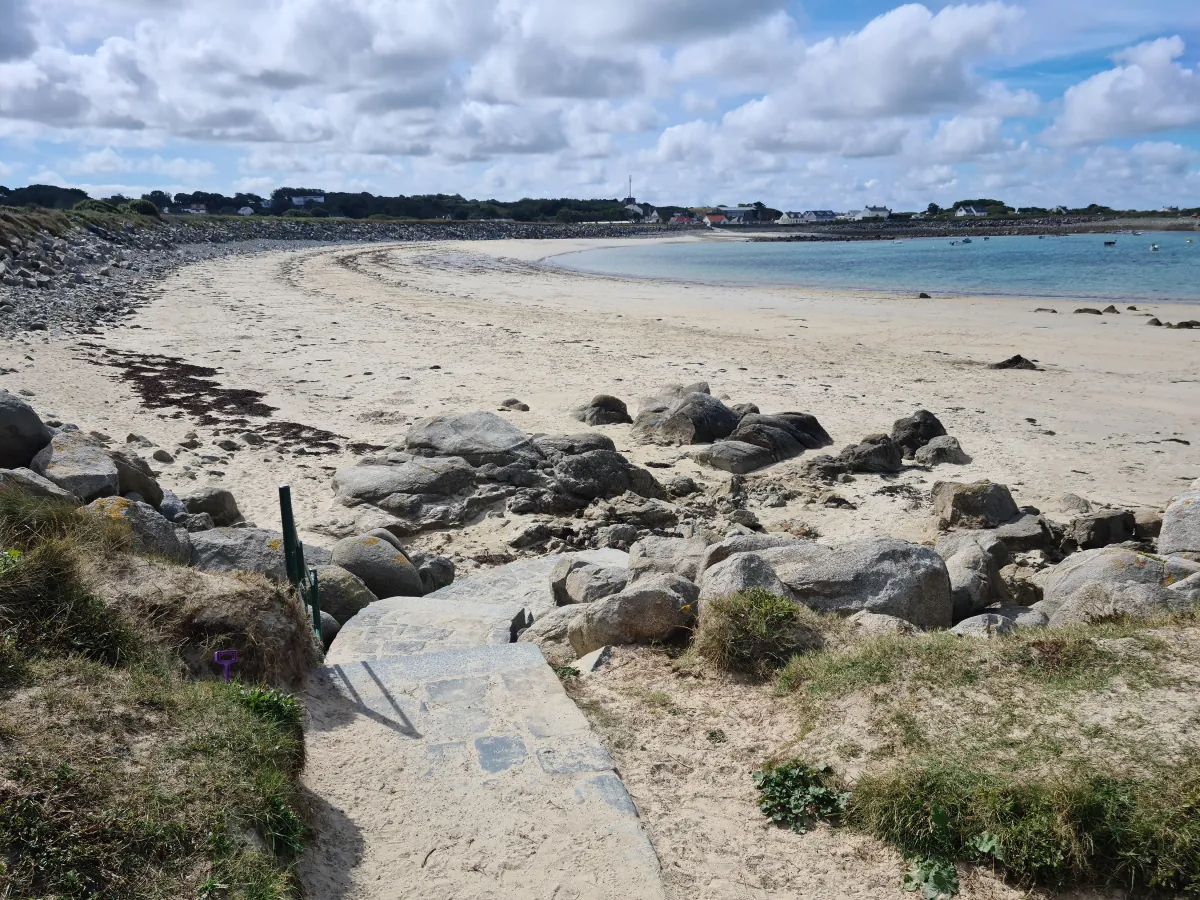 North-west
 North
North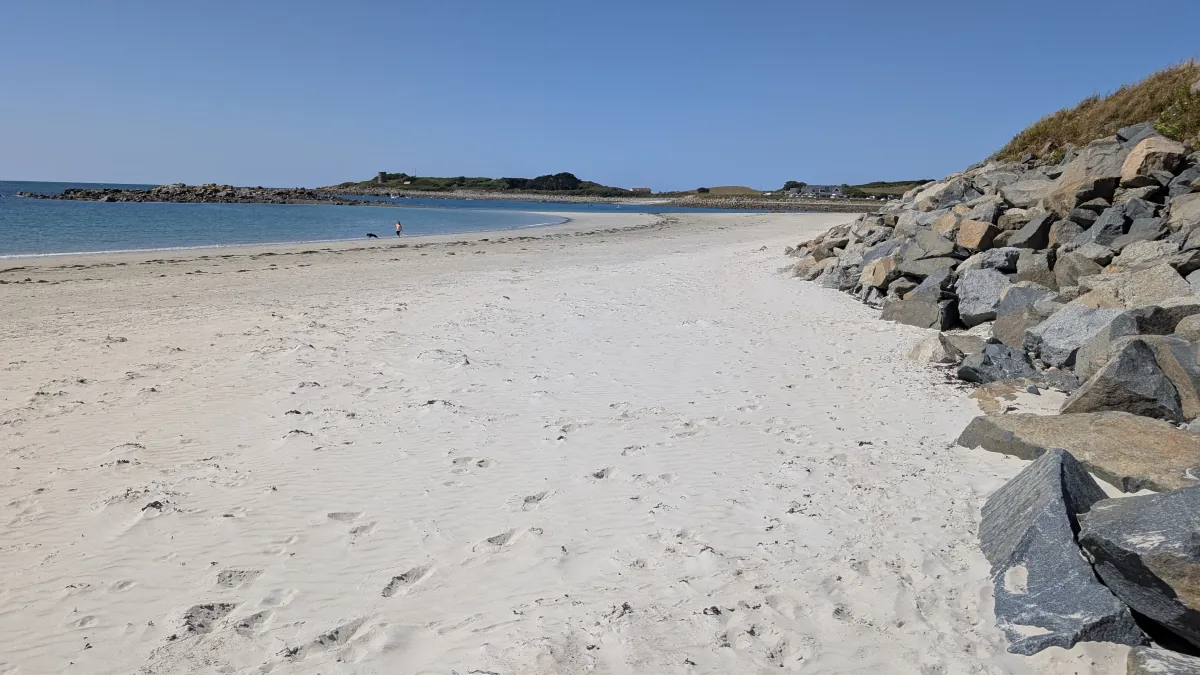 North
NorthTides. Tide predictions are forecasts. Actual sea level is affected by atmospheric pressure, wind and waves. Always observe the sea and your surroundings.
Swimming. Sea swimming carries risks: currents, waves, rocks, submerged structures, boats and cold water. This page is for planning and does not confirm conditions are safe. Do not assume the beach is lifeguarded.
Facilities. Facilities and café opening hours change seasonally. Check directly before making a journey specifically to use them.
 Guernsey